 AI & Clinical Decision-Making Laboratory
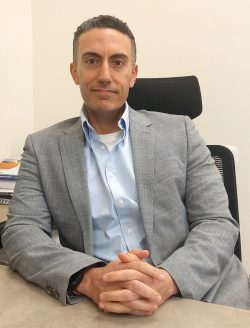
Shahar Shelly, MD is a neurologist and Chair of the Department of Neurology at Rambam Health Care Campus. He holds a faculty appointment at the Technion, Israel Institute of Technology, and directs the Neurology AI Laboratory.
The laboratory develops and validates artificial intelligence models for clinical use. Core areas include foundation models, multimodal data integration, and clinical decision support for acute and chronic diseases.
Active projects include neurophysiology models, curation of large clinical datasets, and the integration of AI systems into hospital workflows under regulatory and ethical oversight.
About the Lab
The Shelly Lab develops and rigorously tests artificial intelligence tools that support physicians at the point of care. Based at the Department of Neurology, Rambam Health Care Campus, and the Rappaport Faculty of Medicine, Technion, the lab operates at the intersection of clinical medicine, large language models, and patient safety science.
We build AI systems and then stress-test them under real clinical conditions. Our prospective SHAKED platform, evaluated in the Rambam Emergency Department, is among the first LLM-based clinical decision support systems tested in a live hospital environment. In parallel, we develop safety evaluation frameworks inspired by autonomous-vehicle methodology, formal benchmarks for synthetic clinical data, and retrieval-augmented architectures that make smaller language models perform on par with frontier systems.
A second research pillar bridges clinical neurology and computational methods. The lab investigates neuroimmunological diseases, with an emphasis on myasthenia gravis and immune checkpoint inhibitor neurotoxicity, combining traditional clinical research with machine-learning approaches to autoantibody discovery, HLA associations, and treatment outcomes.
Research Themes
LLM Evaluation & Safety Prospective deployment and evaluation of large language models in clinical settings; safety scoring frameworks for medical AI (MedBAR); detection of hallucination and bias in AI-generated clinical data.
Clinical Decision Support Retrieval-augmented generation for triage and differential diagnosis; real-time bedside decision support; resident competency assessment aligned with ACGME milestones.
AI for Emergency Medicine Machine-learning models for hospitalization prediction at ED arrival; passive detection of domestic violence from triage data; agentic AI systems for acute care workflows.
Neuroimmunology & Neuromuscular Disease Myasthenia gravis treatment optimization (efgartigimod vs plasma exchange in myasthenic crisis); HLA associations in immune checkpoint inhibitor neuromuscular adverse events; autoantibody discovery.
Neuroimaging & Foundation Models Scoping the landscape of LLMs and vision-language models for 3D brain CT and MRI analysis; voice and speech biomarkers powered by AI for neurological diagnosis.
Selected Active Projects
- SHAKED — Prospective evaluation of an LLM clinical decision support system in the Rambam Emergency Department (Nature Medicine, under revision).
- Synthesizer — Multi-model framework (113,000 evaluations) demonstrating that LLMs generate disease-typical rather than patient-specific clinical data, with a human validation study by three board-certified neurologists.
- Structured Retrieval — Showing that retrieval-augmented generation closes the performance gap between low-cost and frontier clinical language models (JAMIA, under review).
- MedBAR Safety Framework — A medical AI safety evaluation platform grounded in autonomous-vehicle methodology, with domain-specific playbooks for ACS, sepsis, stroke, PE, and medication safety.
- DETECT Score — Machine-learning screening tool for domestic violence detection from ED triage data, with a novel two-layer leakage identification method.
- Efgartigimod in Myasthenic Crisis — First prospective comparison of efgartigimod with plasma exchange for myasthenic crisis, with 12-month follow-up.
- LLMs for 3D Brain Imaging — 81-study scoping review mapping the use of large language models and foundation models for brain CT and MRI analysis.
Lab Director
Shahar Shelly, MD
Department of Neurology, Rambam Health Care Campus, Haifa, Israel
Rappaport Faculty of Medicine, Technion – Israel Institute of Technology, Haifa, Israel
Department of Neurology, Mayo Clinic, Rochester, MN, USA
shahar.shell@technion.ac.il
Lab Members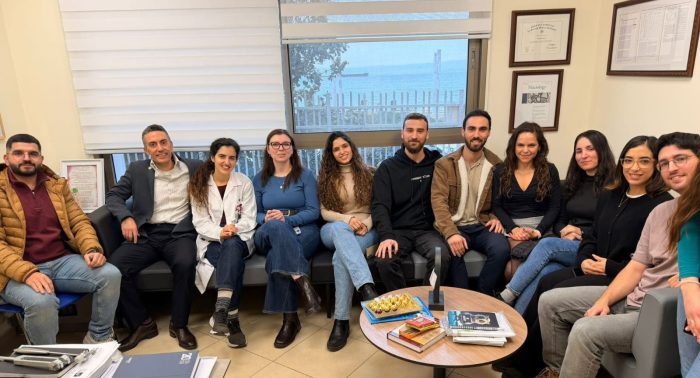
Doctoral Students
Sivan Atias — PhD candidate, Medical Sciences, Rappaport Faculty of Medicine, Technion.
Moran Sorka — PhD candidate, Medical Sciences, Rappaport Faculty of Medicine, Technion.
Master’s Students
Inbar Shemesh — MSc (thesis track), Medical Sciences, Rappaport Faculty of Medicine, Technion.
Ido Avital — MSc, Data Science, Faculty of Data and Decision Sciences, Technion.
Roni Dagni — MSc, Computer Science, Efi Arazi School of Computer Science, Reichman University.
Co-supervised with Dr. Shelly at the Technion Faculty of Medicine.
Links
PubMed: https://pubmed.ncbi.nlm.nih.gov/?term=Shelly+Shahar